
Have you been studying the menu for a dinner with friends, but don’t know which wines to pair? A proper food-wine pairing is essential to enhance the characteristics of both.
How to choose the right wine for each course?
You should know that there are different schools of thought regarding food and wine pairings. For example, the English School favors individual choice (therefore based on subjective taste); then there is a French School that, on the contrary, provides strict criteria for choosing wine pairings. Finally, the Italian School follows a method that we will call sensory, seeking a balance in pairing.
In studying pairings, the Italian School takes into consideration the characteristics of the foods and puts them in context. Therefore, one can have different types of food-wine pairings: traditional pairing ( think of a tradition in the Veneto hills i.e. chestnuts and Verdiso Veneto Igt) or a psychological pairing (the very famous oysters and champagne for special occasions), then there are pairings that we will call thematic or curious. And again, pairings by concordance or contrast of flavors and in this case we are talking about the Mercadini method.
In any case, pairing the right wine with each course allows you to ‘cleanse your mouth’ and ensure that with each sip the wine blends harmoniously with the food, allowing you to fully enjoy the different dishes.
Before moving on to pairings, you should know that there are some foods that are difficult to pair with wines. Fresh fruit for example, some vegetables that tend toward bitterness such as artichokes, tomato salad because of its acidity, and reluctantly, ice cream and chocolate.
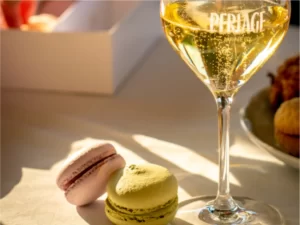
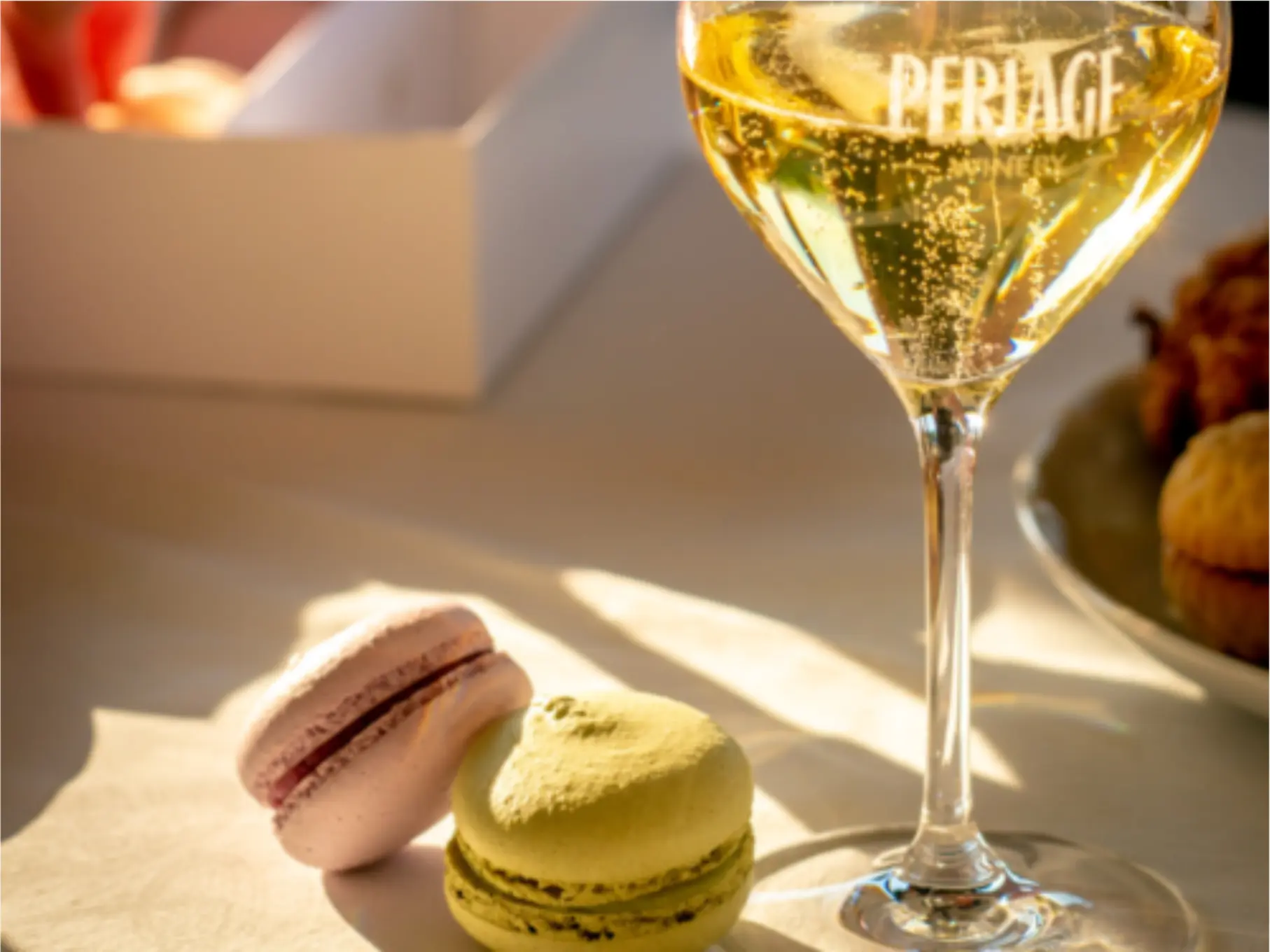
Quorum Valdobbiadene Prosecco Superiore DOCG Extra Dry and Macarons
Let us now look at some possible food-wine pairings:
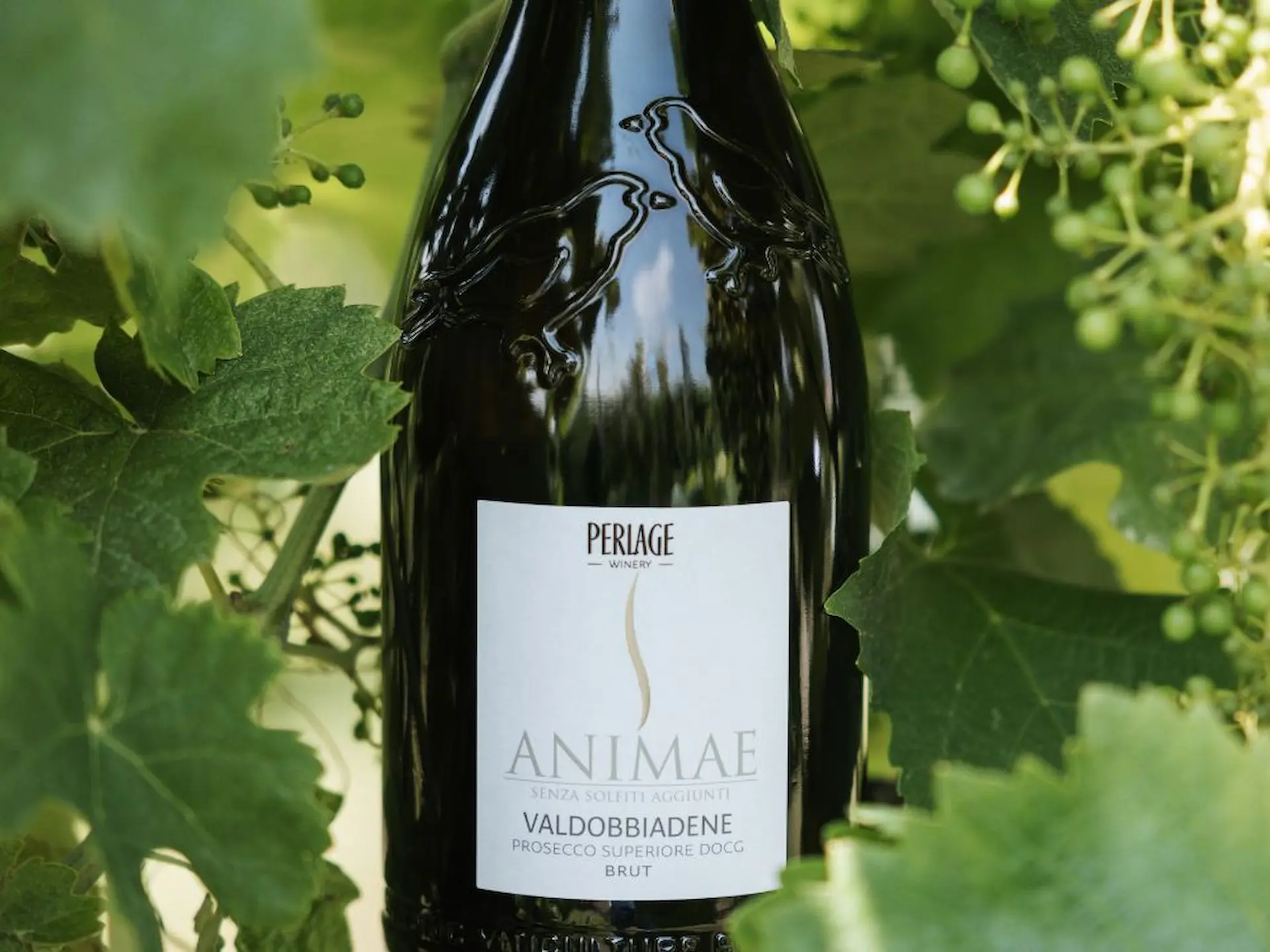
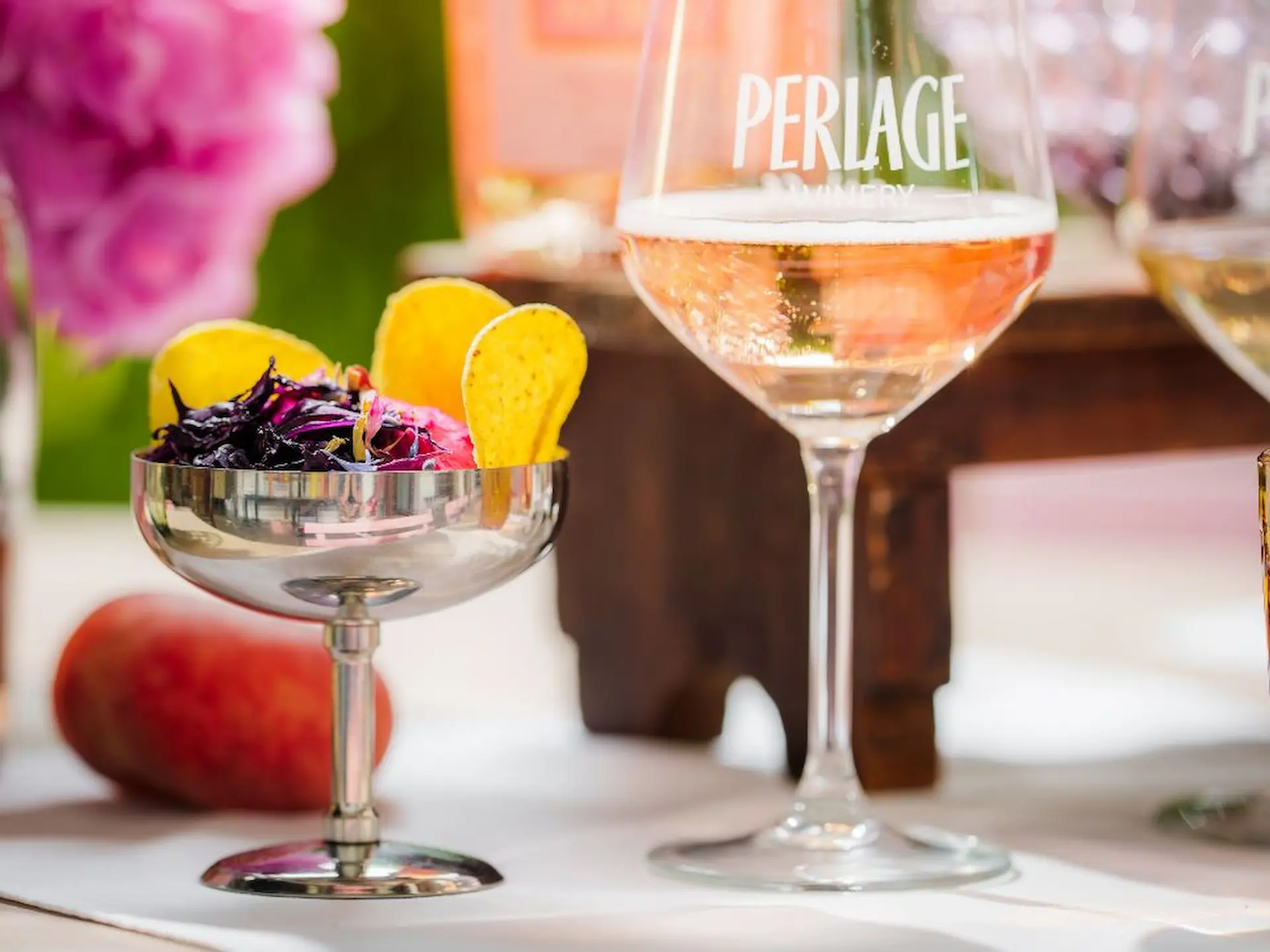
Have you thought about starting with puff pastry appetizers or light fish entrees? An organic Valdobbiadene Prosecco Superiore DOCG is the right choice; a Brut or Extra Dry bubbly accompanies the softness of these dishes, then cleansing the mouth in preparation for the first course. If, on the other hand, you will welcome your guests with a flan with seasonal vegetables a pink bubbly such as Afra Prosecco DOC Rosé is ideal, accompanying the delicate flavors without overpowering.
Will you then move on to a vegetarian risotto or pasta? Pinot Grigio delle Venezie DOC is the wine for you, a still, smooth white. If, on the other hand, the sauce is seafood, better pair with a drier wine, perhaps even a bubbly. We suggest Genesis Asolo Prosecco Superiore DOCG Extra Brut.
What wines to pair with the main course? If you are leaning toward a seafood main course the choice will fall on a dry, slightly fruity white could be Verdiso Veneto Igt by Perlage, with a slight bubble helps to ‘degrease’, great if it is a fried dish.
Have you opted for meat? When the preparations include chicken and veal you can choose a young, light red wine such as Borgo Faveri Rosso Biodynamico while if you choose more demanding cooking, alla grigia or stews better match a more structured red wine, perhaps with some aging.
What is the right pairing with dessert? There are many types of desserts, but as a general rule we recommend accompanying this last course with a sparkling wine or soft, sweet still wine. If, like us, you are fond of bubbles an Extra Dry sparkling wine will do the trick.