
Rousseau said, “the sense of smell is the sense of imagination”! Certainly, among the various senses developed by man, it is the most evocative and the most poetic.
This statement is even more apt when we think of wine and its heady scents or aromas, which remind us of juicy apples, crisp pears, dark chocolate or coffee, roses, wild flowers or licorice, thyme and sage, citrus or cloves, cinnamon…

Organic wines and aromas
But how do the aromas present in wine come about?
The aromas we find in wine, are due to the presence of volatile compounds consisting of aromatic molecules dissolved in the wine itself. Once the wine comes into contact with the air, these molecules evaporate and are perceived as scents by our olfactory receptors.
There are thousands of volatile compounds and with different concentrations, the set of scents present in a wine is called bouquet. Olfactory and taste sensations are valuable, helping us define the quality of the wine and guiding us in pairing it with food.
What kinds of aromas can we find in wines?
Aromas in wine are divided mainly into primary, secondary and tertiary.
The primary or varietal aromas come from the grape berries, specifically the skin, and are more or less intense depending on the grape variety, the terroir and the winemaking method. For example, among these aromas we find the main descriptors of Conegliano Valdobbiadene DOCG, namely fruity, floral, vegetal or mineral aromas. We suggest you taste our Col di Manza Valdobbiadene Prosecco Superiore DOCG from biodynamic grapes to fully perceive the aromas of yellow apple, peach, rose and wild flowers.
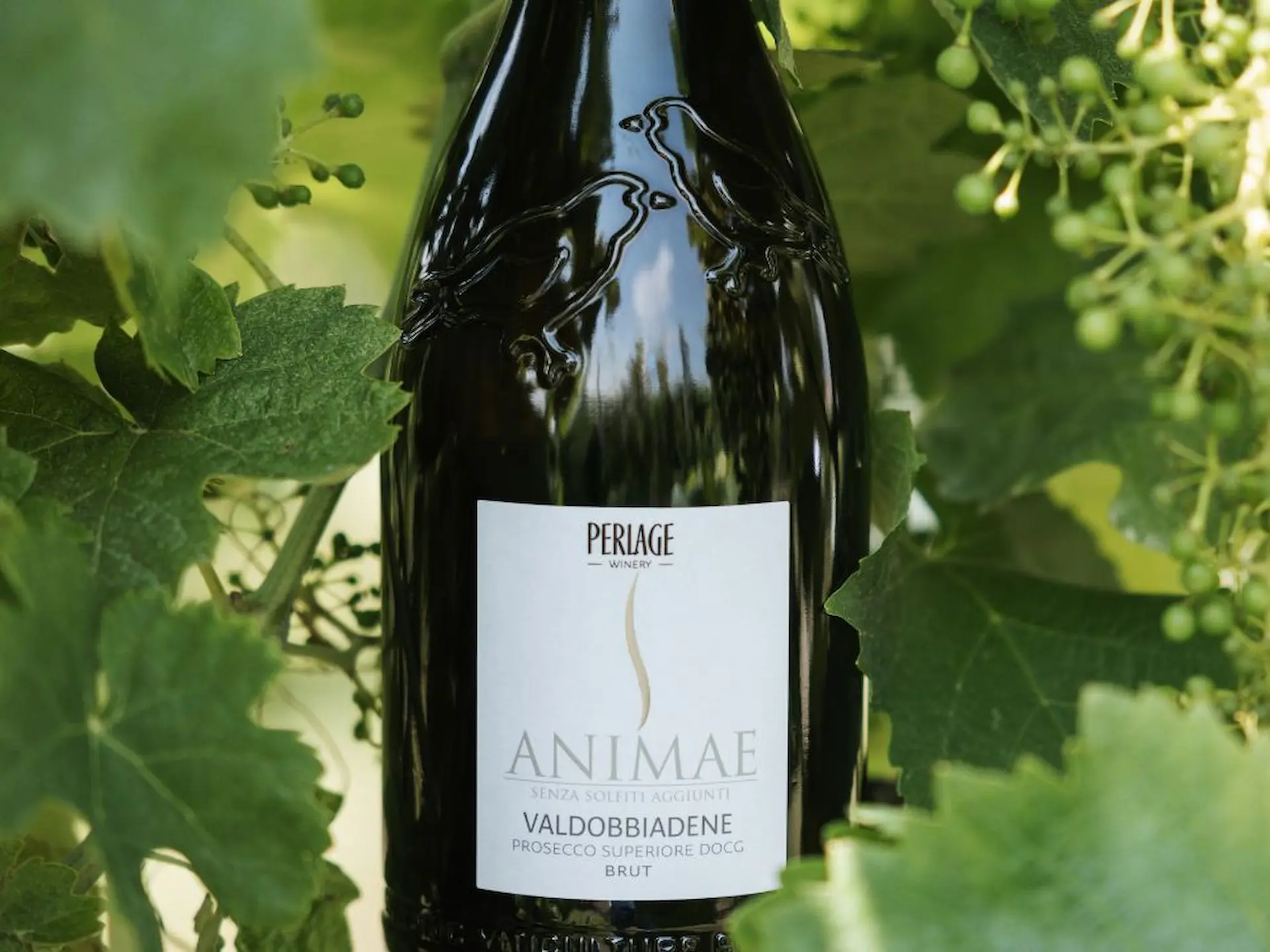
Instead, what gives rise to the secondary aromas is fermentation, a process by which sugars are transformed into alcohol. It is therefore the yeasts, conditions and temperature of fermentation that have the greatest influence on this type of aroma. The secondary aromas we encounter in the glass are, for example, the elegant notes of bread crust, yeast or caramel. A good example is Animae Valdobbiadene Prosecco Superiore DOCG without added sulfites from the aromas of pear, bread crust and yeast.
The last type of aromas, is represented by tertiary aromas (also called evolutionary notes) and are given by aging. Then, depending on the type of aging whether in wood, steel or cement will emerge woody or spicy notes. Thus we find enveloping scents of dried fruit, cedar wood, pepper or licorice. Among Perlage’s red wines certainly Animae Cabernet Veneto IGT without added sulfites is the most complex, at the glass we find vanilla notes due to the short aging in oak barrels.
Why can we say that with organic wine “there is more aroma”?
The evidence comes from a study conducted by professors Magali Delmas (California Institute of the Environment and Sustainability) and Olivier Gergaud (KEDGE Business School in Bordeaux). In 2016, they compared the ratings obtained from 74,000 California wines reviewed by 3 influential wine magazines: Wine Advocate, Wine Spectator and Wine Enthusiast; they found that the difference in scores between organic and conventional wines was +4.2%.
Delmas and Gergaud repeated the analysis in 2021 with 128,000 French wines, and once again certified organic or biodynamic bottles were found to have the highest scores. Indeed, the gap increased: +6.2 percent for organic wines and +11.8 percent for biodynamic wines.
These researches, have shown that among the determining factors in obtaining wines with high organoleptic qualities are: the cultivation methodology and the attention paid during the winemaking phase in the cellar. Not using chemicals in the vineyard makes it possible to preserve the biodiversity of the soil and to pay more attention to the raw material. The resulting organic grapes are rich in nutrients, antioxidants and aromatic substances. In a second step, in order to obtain wines rich in flavor and fragrance, the selection of yeasts, clarifiers (which in Perlage’s vegan and organic wines are of plant origin) and an ever decreasing use of sulfites, ensure that the aromaticity of the grapes is expressed more at the moment of tasting, exploding in the glass in fragrant aromatic notes.
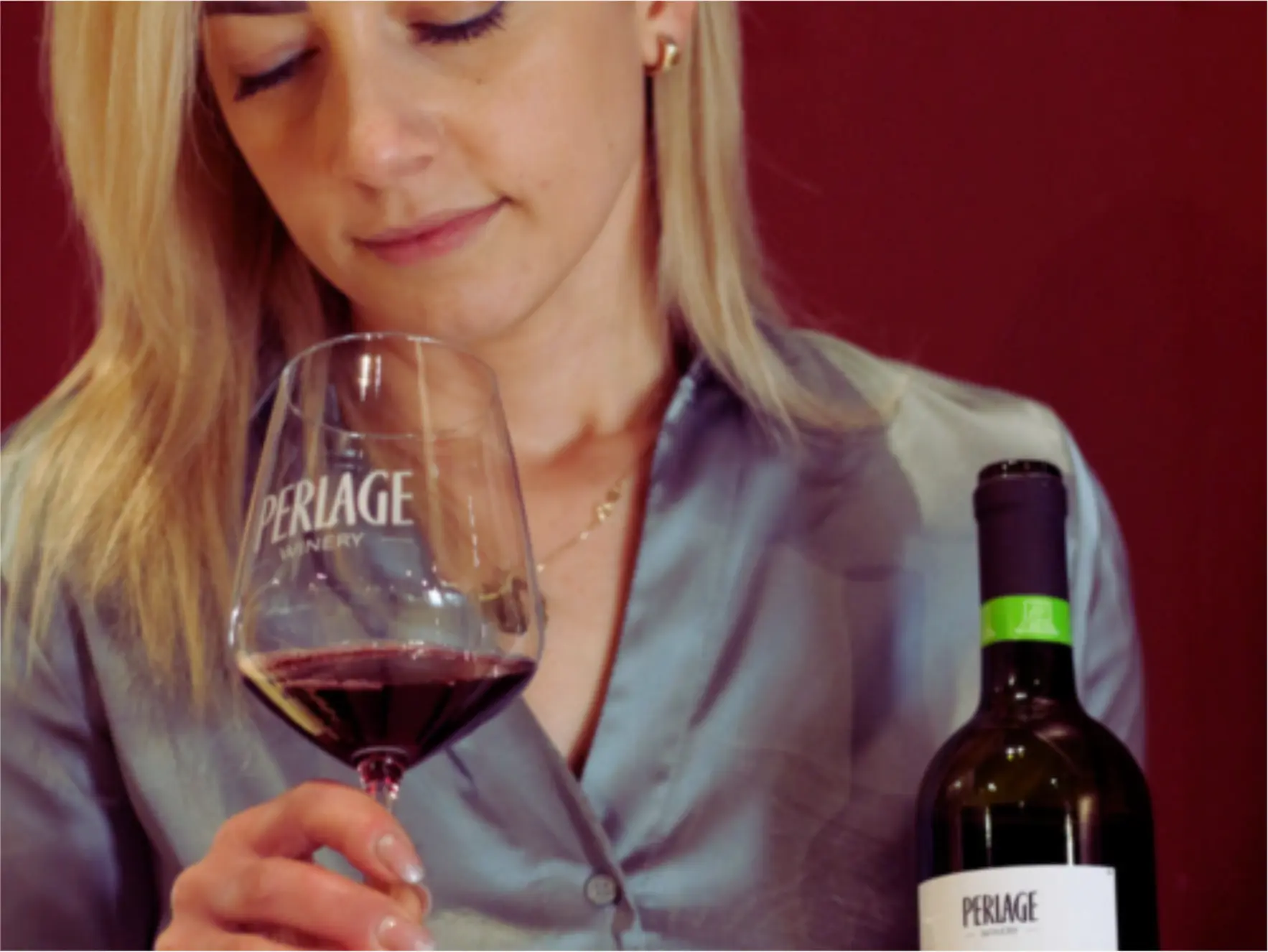
All we have to do is stick our noses in the glass and then taste!!! Cheers!