
Economic balance sheet | Social Report | Sustainability

Bioblog

Perlage’s first social report: sustainability data

2 min read
"Why choose BIO?" surrounded by fresh fruits and vegetables.

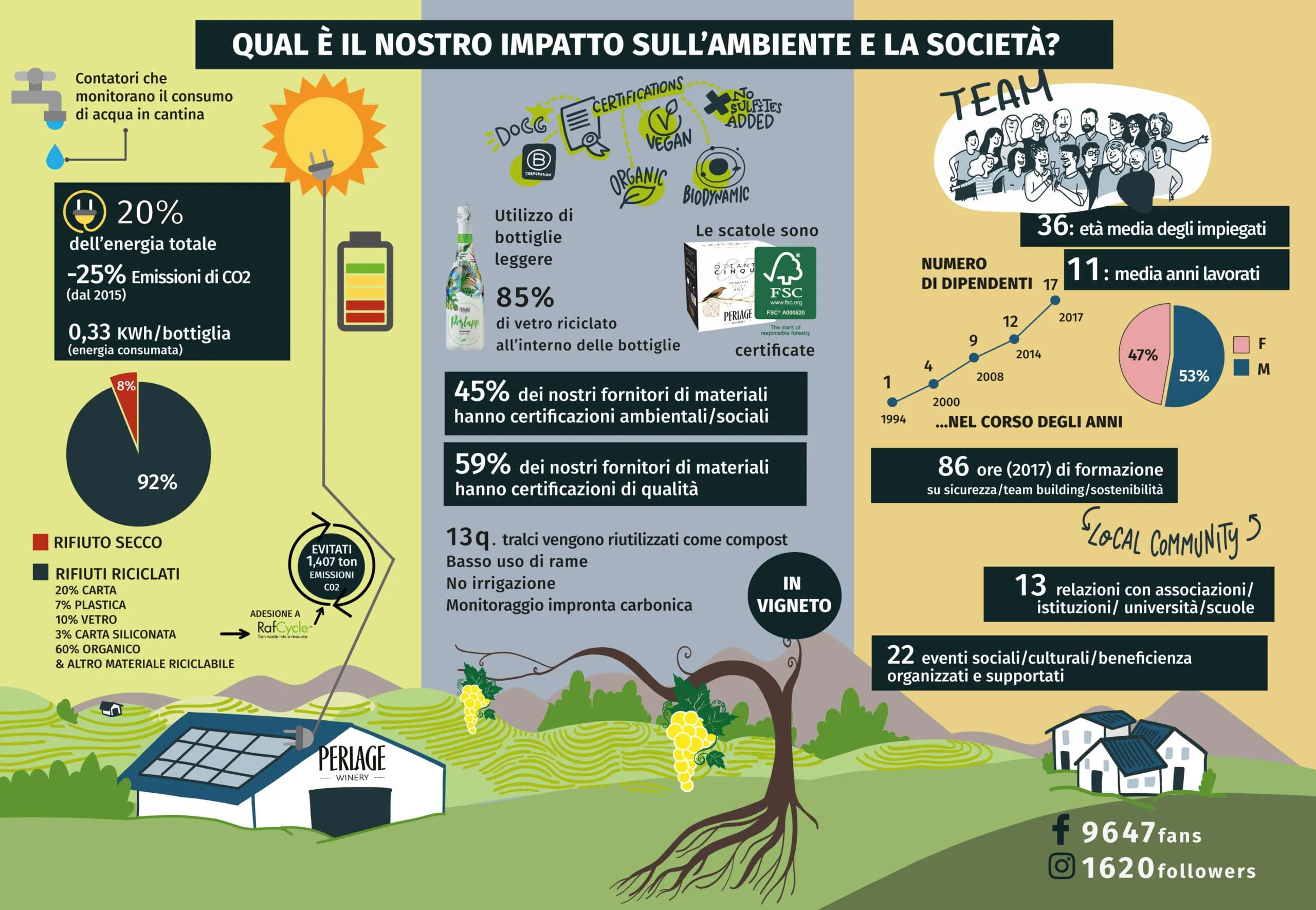
December 2018: Perlage publishes its first social report, consciously embarking on a path of non-financial reporting.

Traditionally, it has been customary to refer to financial statements exclusively in economic terms, in the sense of reporting, annually, the company’s financial, asset and economic data. However, it is evident how a company, today, in everyday reality, does not play an exclusively economic role, but also a social one. This is, moreover, one of the pillars of Corporate Social Responsibility.

But more exactly, what does it mean to draw up “a social budget”? Why should each company be spurred to do so?

Making a social report means reporting externally about the impact the company has on its Stakeholders, Society, and especially the Environment.

And what are the stakeholders? The latter play a fundamental role in the social report, since they are all those stakeholders with whom the company interfaces in its daily work, employees, customers, suppliers, public administration, shareholders, consumers, the environment… Each stakeholder may have a certain level of interest and influence on the company.

That is why it is important to identify key or strategic stakeholders; that is why it is necessary to involve them in business processes (from product selection to events).

The company gets directly in touch with stakeholders, so as to put them in a position to offer feedback on the company’s operations. In fact, we could also call the social report a “Stakeholder Report.”

Transparency and accountability (accountability) not only financially but also socially and environmentally. In practice we give evidence of how the money from the company’s profit is used for the identified key stakeholders.

What are the benefits? The social report is an opportunity for discussion and involvement of its stakeholders, collection of useful elements to focus the company’s mission, promotion of internal/external communication and transparency of the company.

Related articles

Sulfites: what they are and why they are used in wine

Sulfites: what they are and why they are used in wine

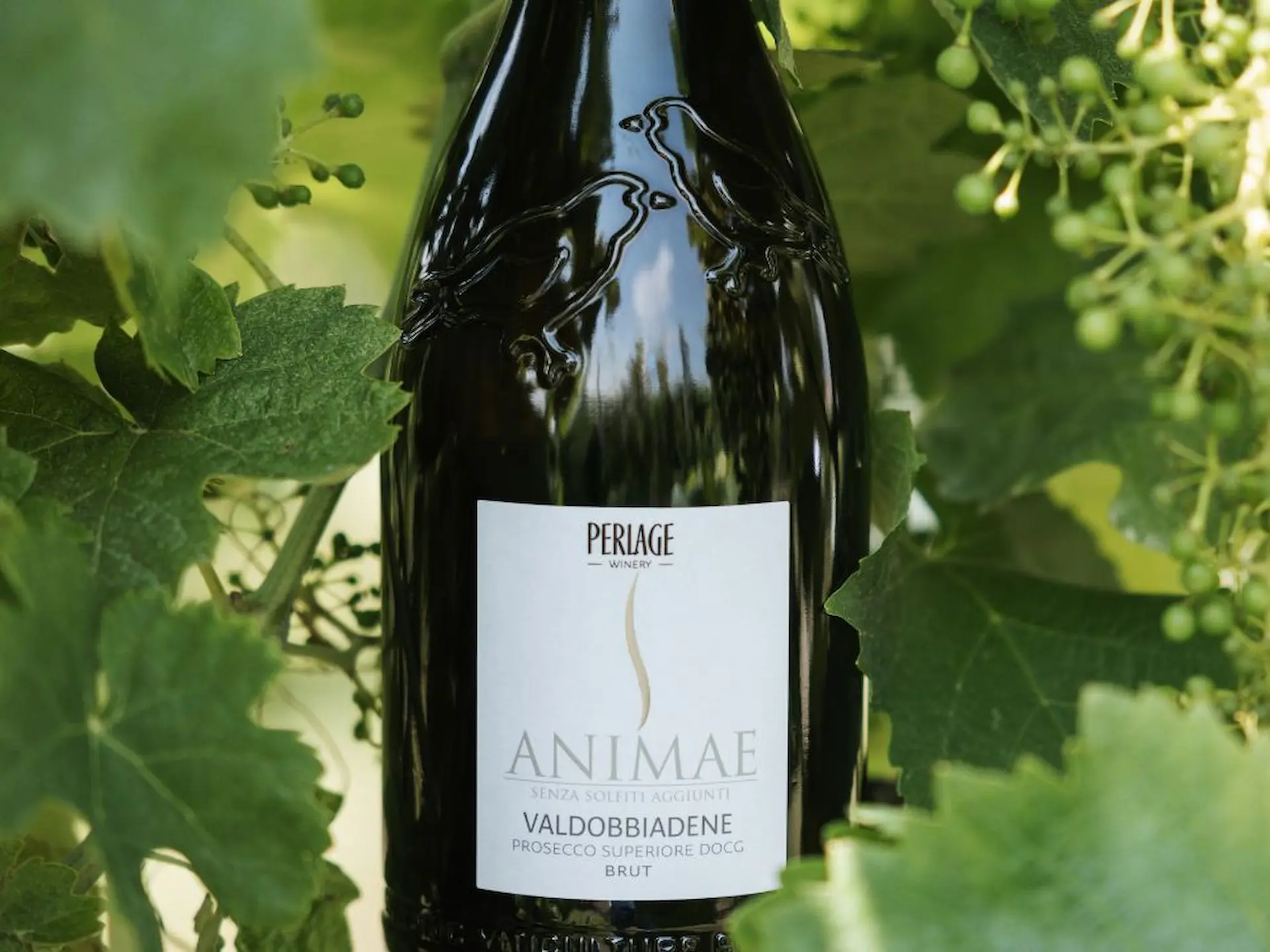
Sulfites, natural or added, serve to preserve wine from oxidation and mold. Organic wines use them to a small extent and some, like natural wines, contain none at all. Perlage revolutionized the industry by creating in 2008 the first Prosecco DOCG without added sulfites, Animae, followed in 2016 by Animae Cabernet Veneto IGT. The Animae range celebrates authenticity, purity and respect for the environment.

read more
V for vegan wines

V for vegan wines

World Vegan Day, celebrated on November 1, emphasizes the importance of sustainable nutrition in wine as well. Not all wines are vegan: to be so, they must exclude animal products at all stages, from cultivation to clarification in the cellar. Perlage began producing vegan wines in 2012 with Sgàjo Prosecco DOC Extra Dry and since 2016 all production has been organic and vegan, combining sustainability and innovation.

read more
Quality soil to protect people and the environment

Quality soil to protect people and the environment

Perlage protects soil biodiversity to ensure healthy soils, reduce CO₂ emissions and produce quality grapes. It uses compost in the vineyards, collects organic matter for new nutrients, measures its carbon footprint, and uses photovoltaic panels and efficient technologies. The company adopts the 5Rs philosophy (rethink, recycle, reduce, respect, regenerate) for sustainable agriculture and excellent wines.

read more

The Perlage Family

A choice that has led Perlage to be, today, one of the most renowned organic wine producers in the Veneto region.

Memory of tradition and the elegance of modernity
Perlage has been producing organic wine since 1985, with the memory of tradition and the elegance of modernity.