
It is all about bubbles i.e., perlage. The difference between sparkling, semi-sparkling and still wine lies precisely in the amount of bubbles. Perlage is a French word meaning ‘string of pearls’ and refers to bubbles.
Perlage is formed as a result of the release of carbon dioxide in wines (especially sparkling wines). Its formation is the result of a chemical process that develops during the second fermentation: at this stage the transformation and activity of sugars and yeasts leads to the production of ethyl alcohol and generates carbon dioxide that remains trapped in the bottles, returning to a liquid state due to the high pressure present.
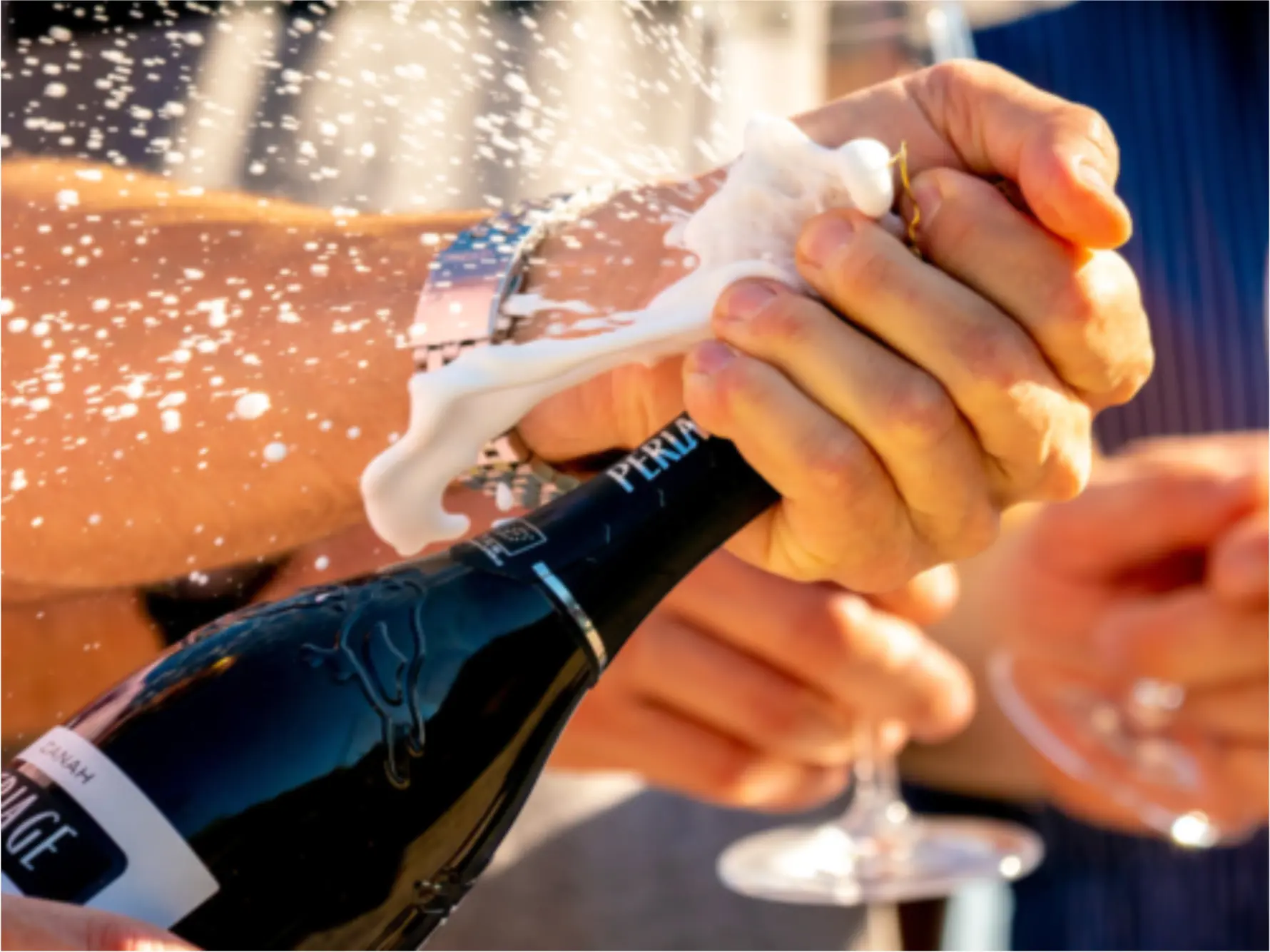
Once the sparkling wine is uncorked and then poured, atmospheric pressure drops resulting in a new change of state: carbon dioxide in fact returns to the gaseous state. These bubbles go on to form froth until they reach a critical size beyond which they are released to leave room for other bubbles that are rising. Thus a chain of pearls, called perlage, is formed.
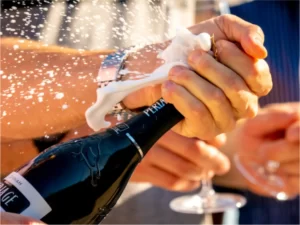
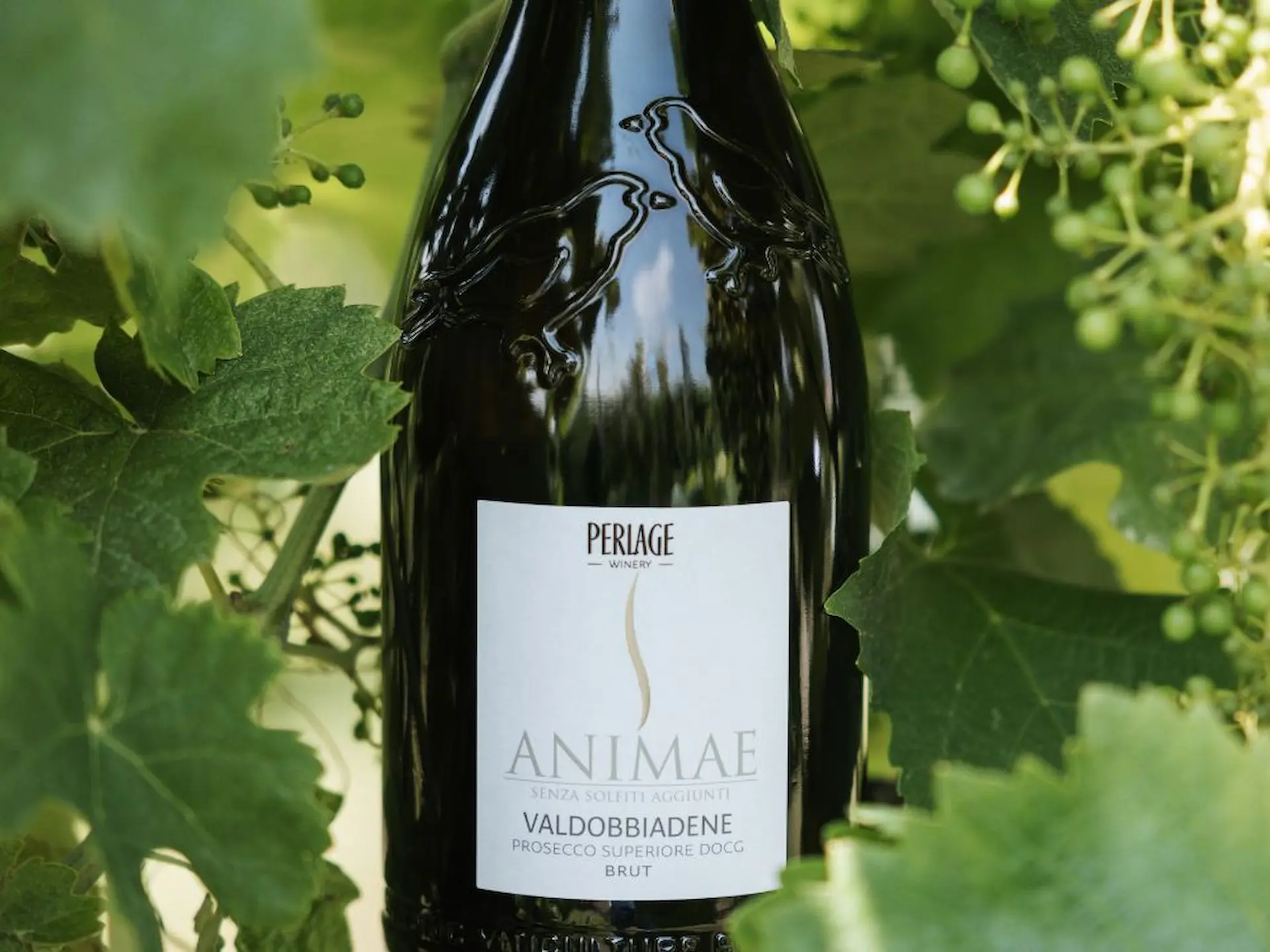
Organic sparkling wine Canah Valdobbiadene Prosecco Superiore DOCG
What role does perlage play in tasting?
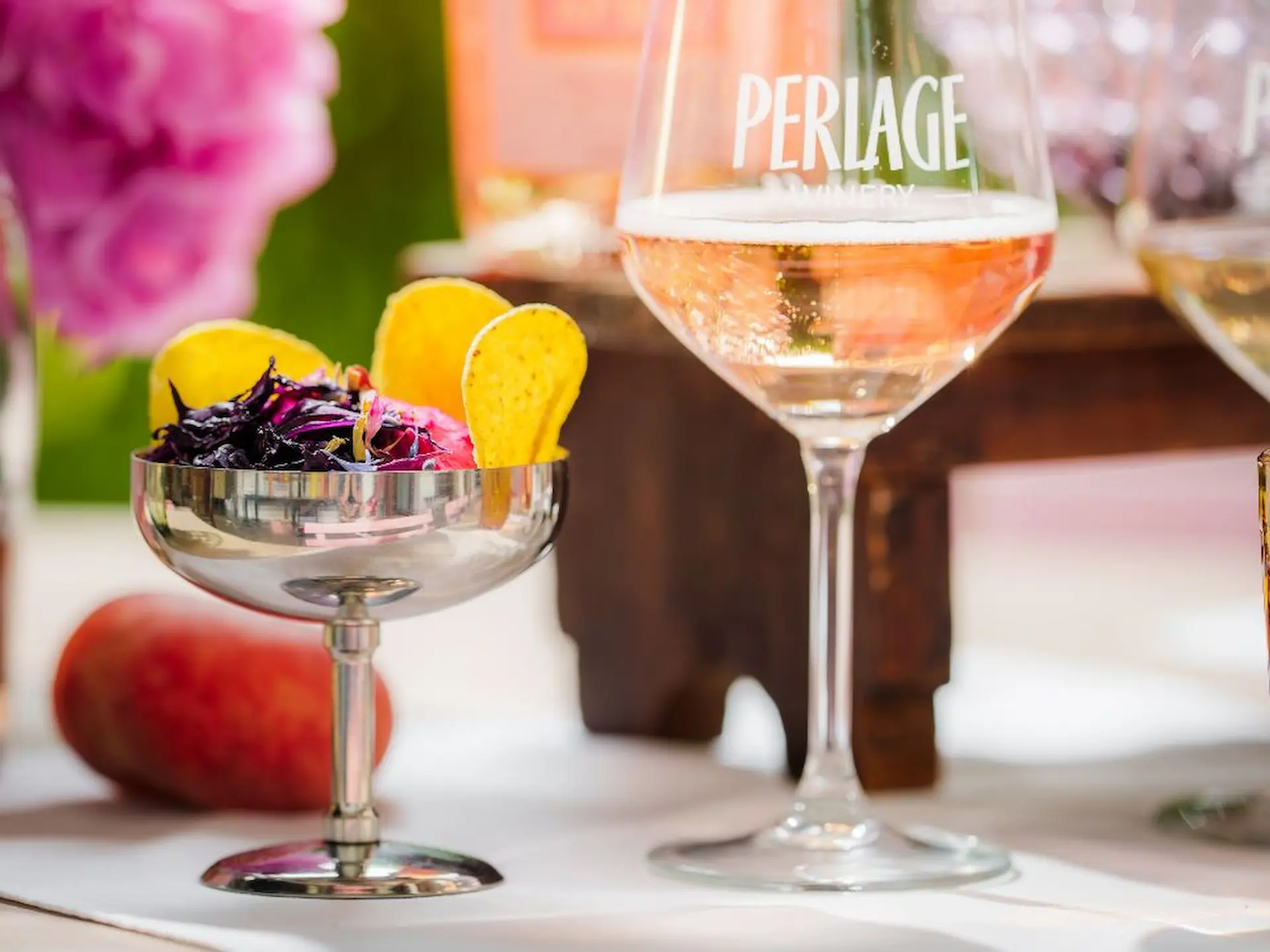
When tasting sparkling wines, perlage plays a key role. As first, the bubbles rising to the surface create a fascinating and pleasing display of shapes.
From the sensory point of view, these small bubbles in their rising path carry with them the aromatic molecules that are then released. In fact, the perlage at the olfactory level goes to emphasize and convey scents, while at the gustatory level it reinforces the sensation of freshness.
During tasting, visual examination of perlage is often used by sommeliers to give an initial qualitative assessment of sparkling and semi-sparkling wines.
If the bubbles are fine, numerous, persistent and rise quickly to the surface, the sparkling wine is considered quality and pleasing to the eye.
But then what is the difference between sparkling, fizzy or still wine?
The elements that make the difference in these three types of wine are: the amount of carbon dioxide (of bubbles) and the pressure inside the bottle.
Let’s look at the differences in detail:
Sparkling wine in which carbon dioxide is greater than 6 g/l and we find a bottle pressure of 3-5 atmospheres. The froth created is more compact and the bubbles tend to be thinner and quicker in rising.
Frizzante, here we find between 2 and 5 g/l of carbon dioxide and a bottle pressure between 1 and 2.5 atmospheres. The froth tends to be more evanescent and the bubbles present a larger size.
Still, in this type of wine carbon dioxide is present at very low levels, a maximum of 2 g/l. The pressure is also low, in fact reaching a maximum of 1 atmosphere. Therefore, foam and perlage are not present.
Among Perlage sparkling wines, which has the most elegant and subtle bubbles?
There is no doubt about it, Col di Manza Valdobbiadene Prosecco Superiore DOCG from biodynamic grapes. Don’t miss it!