
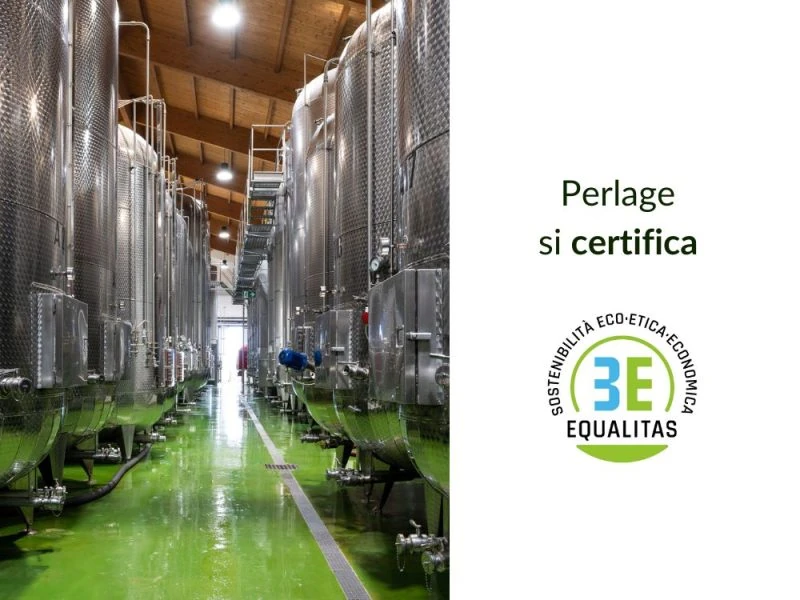
The Equalitas Standard encompasses the three “pillars” of sustainability—environmental, economic, and social—and applies to the entire wine supply chain.
Equalitas was founded in 2015 following a process of gathering and comparing experiences within the academic and business communities. The standard is the result of initiatives by Federdoc, the CSQA Certification Bodies, Valoritalia, and the renowned Gambero Rosso Foundation.
Why did Perlage choose to obtain Equalitas certification?
Perlage has chosen to adopt the Equalitas standard because it is a certification system designed to encourage the wine industry to integrate sustainability into its various business processes. This system consists of a series of indicators that serve both to map performance and to guide companies toward more advanced sustainable practices.
As with other certifications, the lengthy certification process is overseen by a third-party body to ensure maximum transparency in the management and analysis of data and sustainability performance.
Thanks to Equalitas, Perlage is further strengthening its management structure, improving planning processes, and adopting an even more effective reporting method. This tool is useful both for preparing the Sustainability Report and for ensuring the active involvement and engagement of all stakeholders toward continuous improvement.
Joining Equalitas allows Perlage to adopt a certification model recognized both nationally and internationally, strengthening the communication of sustainability values and linking them to the Perlage brand, synonymous with assurance and quality in the production and sale of wines.
This prestigious certification is, in fact, viewed positively in our markets, large-scale retail channels, the hospitality sector, and the media, where it is recognized as the highest standard for sustainable wine.
What areas does the Equalitas certification cover?
The various indicators considered by Equalitas assess the company’s biodiversity, carbon footprint, and water footprint, as well as analyze “best practices in production, economics, social responsibility, and communication” designed to ensure sustainable, responsible, and transparent management.